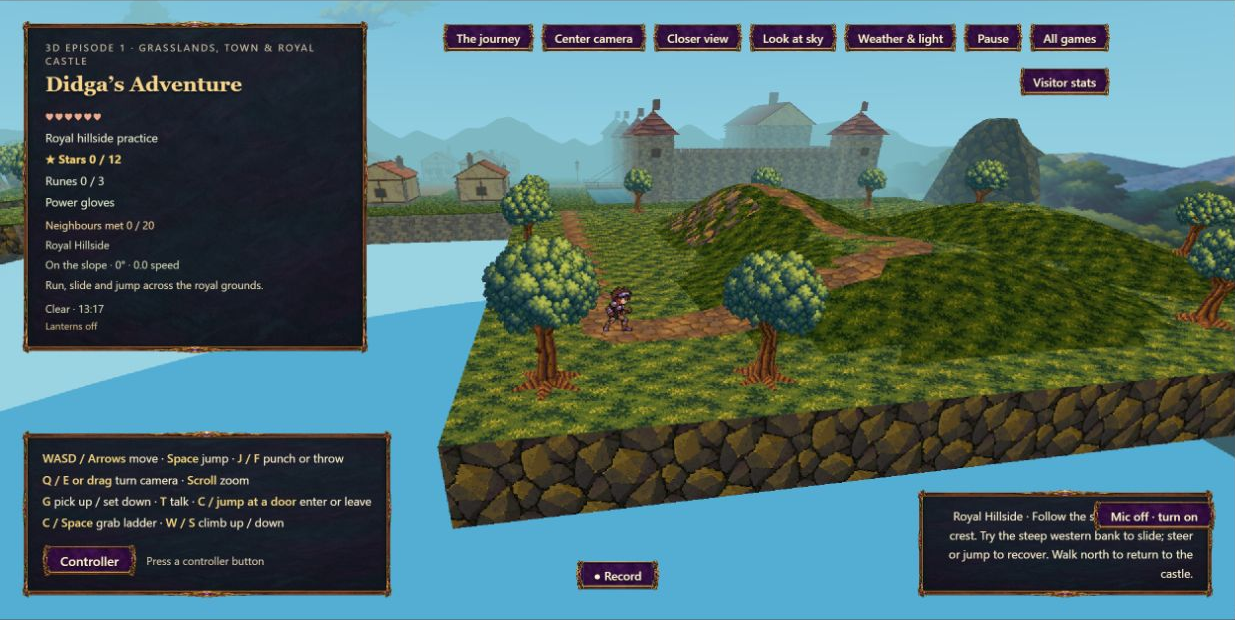
The first hill test replaced two opening forest terraces. This request takes the idea further: use the open, rolling grounds outside Super Mario 64’s castle as a movement reference, then make a new hillside that belongs to Didga’s own kingdom.
The castle-grounds gameplay reference is about the feeling of an inviting grassy area, a visible climb and enough room to play with momentum. The layout, terrain, painted textures and castle setting are Didga’s own. Nintendo models, textures, music and level data are not part of this addition.
Give the castle a landscape.
The new grounds sit south of the kingdom’s royal castle, connected to the existing town and castle area. The 66-by-52-unit lawn joins three rolling rises and a shallow saddle; its highest point is 5.5 units above the surrounding ground. A broad approach gives Didga a way onto the hill without jumping. Choose Try royal hills on the ready screen, or Visit royal hills from Pause. The stone trail leads to the crest; the steeper western face leads back to the lawn. A small angle-and-speed readout makes the movement easier to compare. A higher crest and a steeper face provide a different route back down.
The surface keeps the game’s painted grass and exposed-stone direction. Texture detail belongs on the rising terrain itself, so the new ground has the same visual language as the forest and town. The camera can orbit around a real landform while the hero remains an illustrated directional sprite.
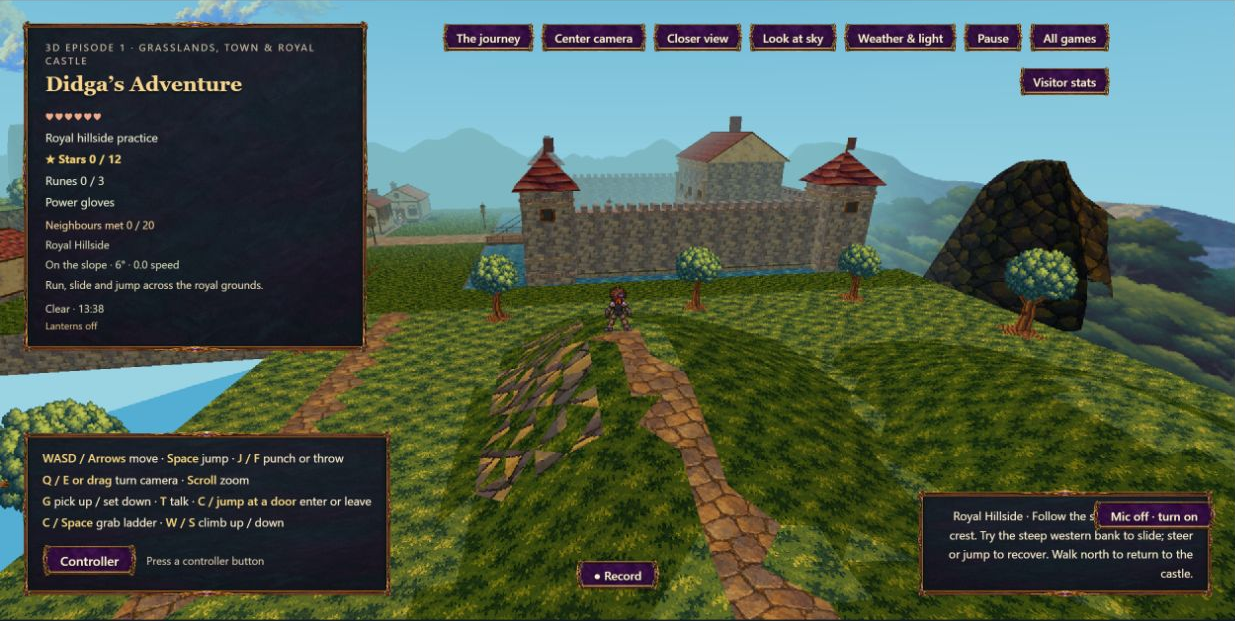
Climb, commit to a slope, then jump clear.
The test separates comfortable walking ground from a face steep enough to slide. Didga can run up the gentle side, turn across the crest and steer into the downhill route. A jump leaves the supporting surface and carries the existing movement into the air.
This builds on the earlier hills-and-crates movement work. Height, surface direction and contact need to agree with the ground being drawn; a painted slope should also be the slope beneath Didga’s feet. The open area makes those transitions easier to inspect than a narrow stack of platforms.
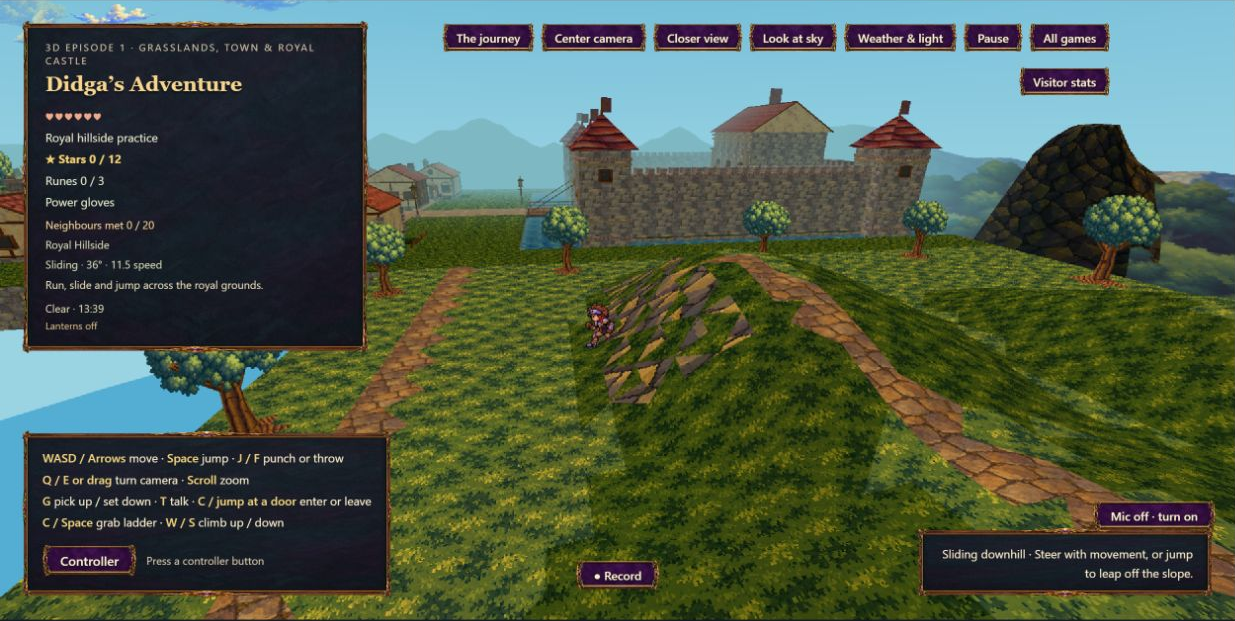
Expand the adventure without losing the earlier test.
The forest hills and wooden crates remain the earlier practice area. Hearthvale, family homes, the royal hall and Root Hollow Cave stay part of the connected world. The new royal grounds are another place to explore, rather than a replacement for the forest stage.
This is a terrain and movement test in the growing 3D Episode 1. It is not a completed recreation of another game’s castle grounds or a finished new story chapter.
What the checks prove.
All 642 game checks, 54 website-package and release-tool checks, and 26 offline publisher checks passed. Native browser review confirmed the Royal Hillside start and pause-menu visit, using the safe western-foot spawn; a movement-only climb to a 5.498-unit crest without airborne frames or respawns; a gravity slide across a 41.5-degree bank, reaching 11.5 speed before stopping on the flat lawn; a jump from the slope followed by a grounded landing without a respawn; the public-package hill entry and movement, with offline authoring links excluded.
The images are actual captures from the reviewed build. Still images show the terrain and character positions; movement observations come from the native input review. Software controller coverage does not establish a fresh test with a physical controller.